Loading...
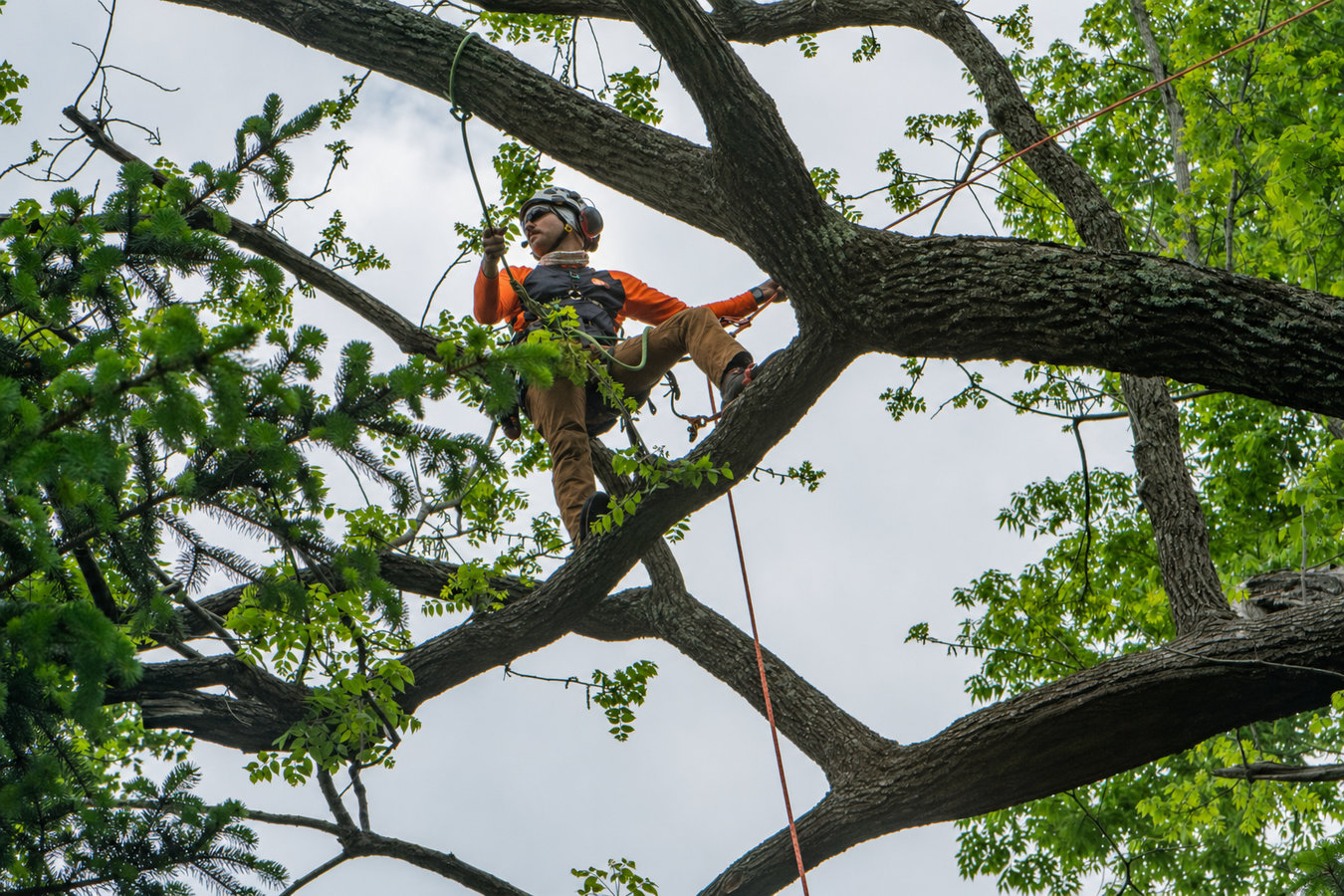
Dead, damaged, or fire-risk trees removed safely from steep hillside lots. Permit guidance included. Your yard left clean.
Tree removal in Los Altos Hills involves assessing the tree, confirming permit requirements, and completing the job safely on steep terrain - most jobs on standard lots finish in a single day. Not every problem tree needs to come down, but some do, and knowing the difference saves you time and money. If you have a dead oak dropping limbs onto your roof or a leaning bay laurel that shifted after the last wet winter, those are situations worth addressing promptly. For trees that still have life in them, professional tree trimming may be all you need.
Los Altos Hills sits within a state-designated fire hazard zone, which means a dead or overgrown tree is not just a nuisance - it is a genuine safety and insurance issue. Many homeowners here remove trees proactively as part of their annual defensible space maintenance, not just when something has already failed.
Branches that are bare while the rest of the tree has leaves, or that look gray and brittle, can fall without warning. In Los Altos Hills, seasonal wind events push through the hills in fall and winter, and a widow-maker over your roof is a liability waiting to happen.
A gradual lean is not always dangerous, but if you notice a tree has shifted its angle over the past year or two, that is worth a professional look. Hillside soil in Los Altos Hills can shift during wet winters, which can destabilize root systems that seemed fine the prior season.
Fungal growth at the base of a tree signals internal decay. Tap the trunk: a solid thud is good, a hollow echo is not. This kind of hidden decay is especially common in older oaks and bay laurels that have been on a property for decades.
CAL FIRE defensible space inspectors and homeowner insurance carriers sometimes identify specific trees that need to come down. If you received a written notice after an inspection, you are likely on a deadline. Ignoring it can affect your coverage and your compliance with state fire safety requirements.
Our tree removal work covers the full range of situations that come up on Los Altos Hills properties - from a single dead oak near the fence line to multi-tree clearance projects on sloped lots with limited equipment access. We handle the permit research first, so nothing is scheduled until we know whether your tree is protected under the town ordinance and what approvals are needed. After removal, we can coordinate stump removal to clear the area completely.
Hillside lots require a different approach than flat suburban properties. We use ropes, rigging, and sectional removal to bring trees down safely in tight spaces, and our crews are experienced working on the kinds of steep, wooded lots that define this town. Every job includes full debris cleanup and haul-away - you should not be left with a pile of branches.
Dead, diseased, or structurally failing trees removed before they become a liability.
Proactive removal of trees flagged by CAL FIRE or identified as part of defensible space compliance.
Trees split, uprooted, or heavily damaged during Bay Area wind or rain events.
Full permit navigation for protected native oaks and heritage trees under the Los Altos Hills tree ordinance.
The town sits in a state-designated fire hazard zone, which changes the stakes around dead and overgrown trees. A tree that might just be an eyesore on a flat Sunnyvale lot becomes a genuine fire and insurance risk on a wooded hillside here. Properties along roads like Page Mill and up toward Rancho San Antonio are surrounded by the kind of mature oak and bay laurel canopy that makes this place beautiful - and that also means crews need to work carefully to avoid damaging what stays.
Access is another real factor. Most Los Altos Hills lots are large and sloped, and getting equipment close to the tree is often not possible. That is why rigging and sectional removal are standard practice here, not a premium add-on. We also serve Palo Alto and Los Altos, where lot conditions and permit requirements are different but the same care applies.
We ask a few basic questions - tree type, size, and proximity to structures. Most hillside properties vary too much to quote accurately by phone, so we schedule a free on-site estimate. We respond within 1 business day.
We walk your property, assess the tree, and confirm whether a permit is required from the town planning department. If a permit is needed, we walk you through the application process - approval typically takes two to four weeks.
The crew sets up the work zone and uses ropes and rigging to control how each section comes down - especially important on hillside lots with limited fall room. You do not need to be home the whole time, but being available at the start helps.
Branches are chipped and hauled away. If stump grinding was part of the job, you will have a pile of chips in the footprint to use as mulch or have removed. We do a final walkthrough with you before packing up - your chance to flag anything.
We respond within 1 business day. There is no obligation to book after your estimate. Once you submit, someone from our office will call you to schedule a free on-site visit and walk through the details of your project.
(650) 680-4022We check your tree against Los Altos Hills ordinance requirements before quoting. You will not discover mid-project that a permit was required - or face fines because work started without one.
California requires a contractor license for jobs over $500. We carry both general liability insurance and workers compensation - ask for proof before anyone sets foot on your property, from us or anyone else.
Steep lots require sectional removal with ropes and rigging. We do not treat hillside access as an add-on cost surprise - it is factored into your quote from the start, in line with ISA Tree Care standards.
Phone estimates on Los Altos Hills properties are rarely accurate. We come to you, walk the property, and give you a written number you can plan around - not a range that shifts on the day of the job.
Working in a fire hazard zone means the margin for error is smaller here than in most Bay Area cities. Every tree contractor working in this zone should hold that standard, and our process reflects it - from the permit check on day one to the final walkthrough before we leave. For permit requirements, the Town of Los Altos Hills Planning Department is the authoritative source. For defensible space rules, CAL FIRE publishes the current requirements for properties in hazard zones.
If your tree is structurally sound but overgrown or posing a fire risk, trimming may solve the problem without removal.
Learn MoreOnce the tree is down, the stump remains - complete the job with full stump removal so the area is clear for replanting or construction.
Learn MoreDead and hazardous trees do not wait for a convenient time to fall - call now to schedule your on-site assessment.